How to find and use YouTube trends to grow in 2026

Written by McCall Lanman
Published on June 10, 2026
Reading time 8 minutes

Table of Contents
YouTube trends move fast, and brands that react too slowly watch their best content opportunities disappear before they publish a single frame. Knowing which topics are gaining momentum, when to act on them and how to optimize your videos for the algorithm separates channels that grow consistently from those that plateau.
This guide covers how to find trending topics on YouTube using YouTube trend analysis tools, how to map consumer intent to YouTube keyword trends and how to turn predictive intelligence into content that the algorithm rewards with compounding reach.
As video consumption behavior shifts, mastering YouTube marketing requires a proactive approach to these shifting cultural moments.
Why YouTube trends matter for brands and creators
YouTube trends are the topics, formats and conversations capturing the most viewer attention on the platform right now. When your content aligns with what people already want to watch, the YouTube algorithm—the recommendation system that decides which videos appear on homepages and search results—rewards you with more impressions and wider discovery.
The result is a compounding effect. Higher impressions lead to more clicks. More clicks improve your click-through rate. A strong click-through rate signals to the algorithm that your content is worth pushing to new audiences, which drives watch time and audience retention. Trending content triggers all of these signals at once.
Staying ahead of macro social media trends ensures your video pipeline remains relevant before interest begins to wane.
How to find trending topics on YouTube
No single source gives you a complete picture of the market. The strongest creators move past vanity virality and treat discovery as a balance in keyword intelligence and search intent.
To build an algorithm-proof content engine, you must use specific YouTube trend analysis tools to capture interest before it peaks.
Use Google Trends for YouTube
Google Trends is a free tool that shows how often people search for a specific term over a set period of time. Most marketers use it for web searches—but filtering it for YouTube search data reveals a completely different and more targeted set of YouTube search trends.
You can view what’s trending from the past 4 hours to as far out as the past 7 days, under the “Trending Now” tab for an understanding of the most recent hot topics increasing in search demand on Google.
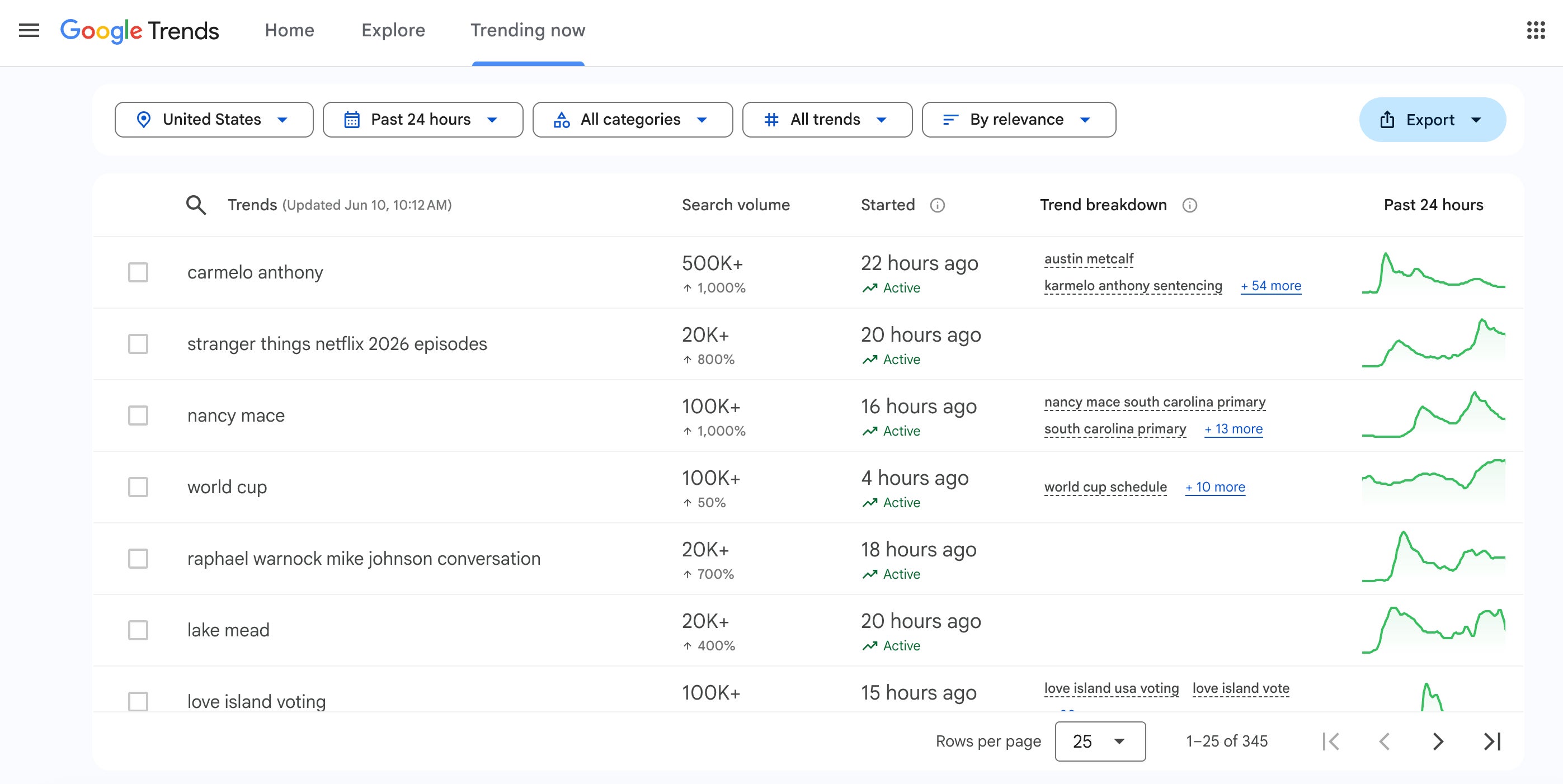
To get specific about YouTube search data that’s relevant for topics in your industry or that you publish on your channel, here’s how to use it:
1. Go to Google Trends and enter your topic in the search bar.
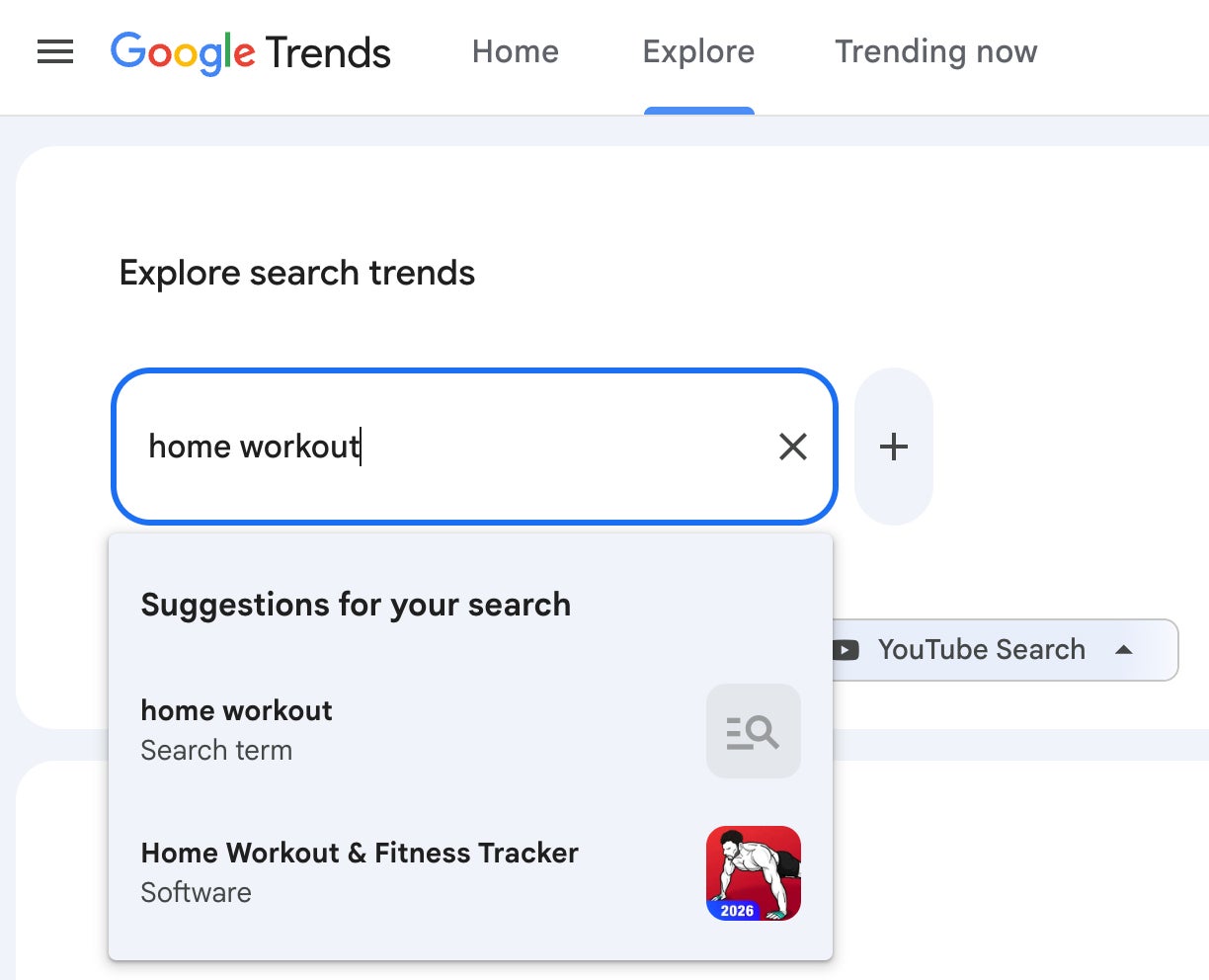
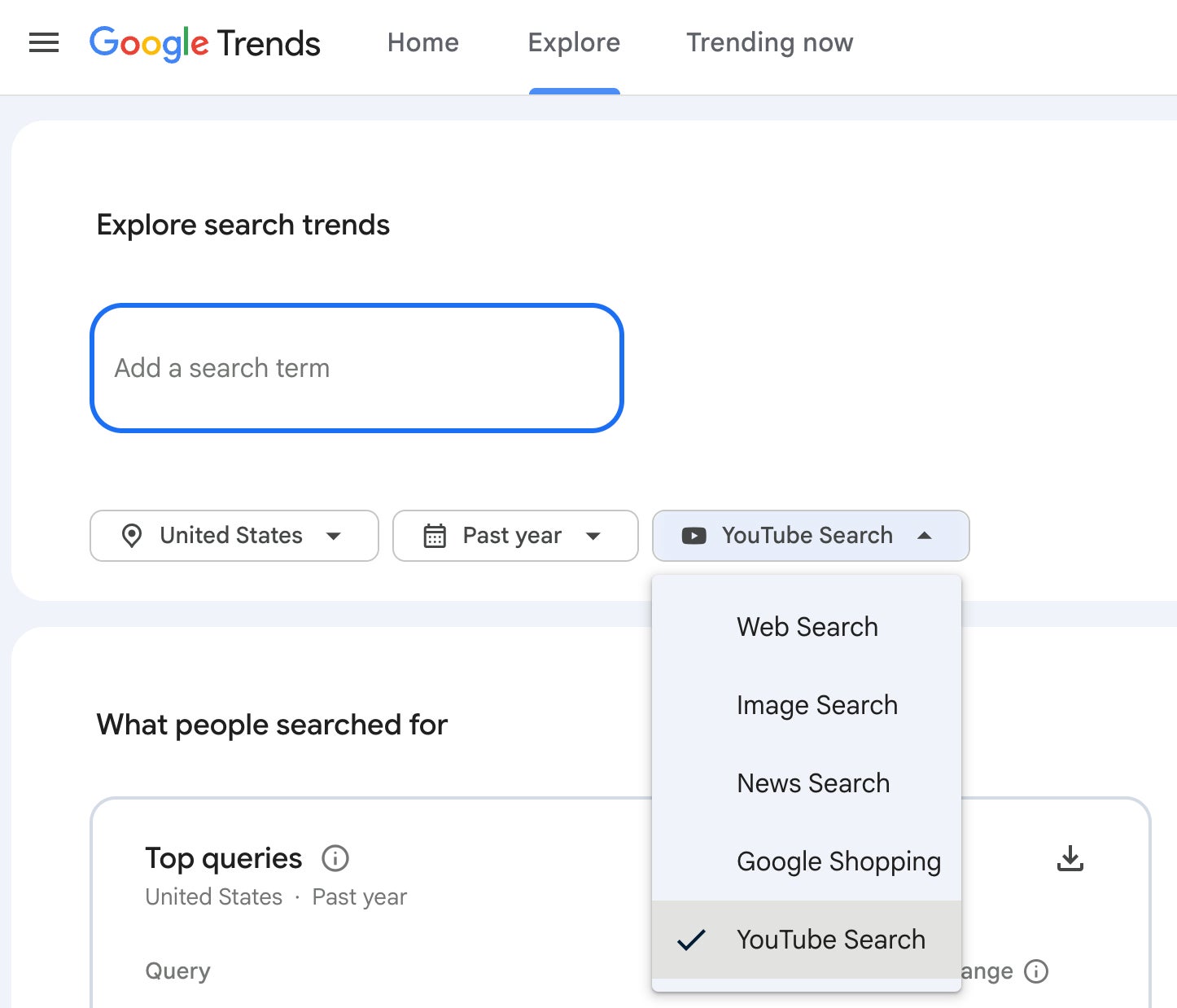
2. Select YouTube Search from the search type dropdown to filter for video-specific queries.
3. Compare multiple keywords side by side to see which has higher search volume.
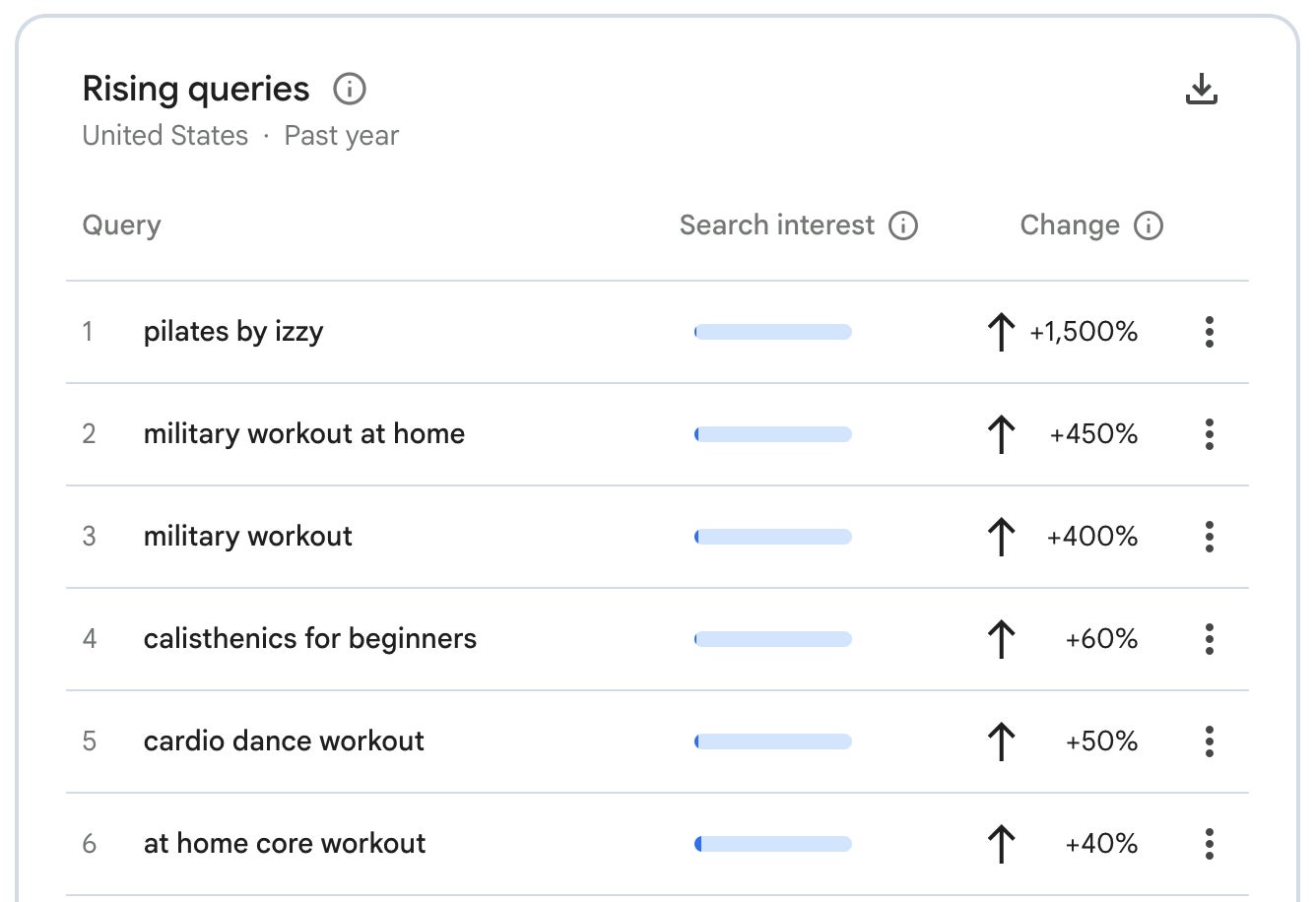
4. Check the geographic breakdown to understand where your related queries perform best.
Pay attention to terms marked as “Breakout.” A Breakout topic indicates a sudden, exponential spike in search interest that has outgrown standard percentage metrics. These are your immediate green lights for production.
Mine YouTube Autocomplete suggestions
YouTube Autocomplete is the predictive search feature that suggests queries as you type. These suggestions are drawn from real search behavior, making them one of the most accurate sources of YouTube search trends available. And, it’s completely free!
Use the alphabet method to extract the most from it:
1. Type your seed keyword into the YouTube search bar without pressing enter.
2. Note every suggestion that appears in the dropdown.
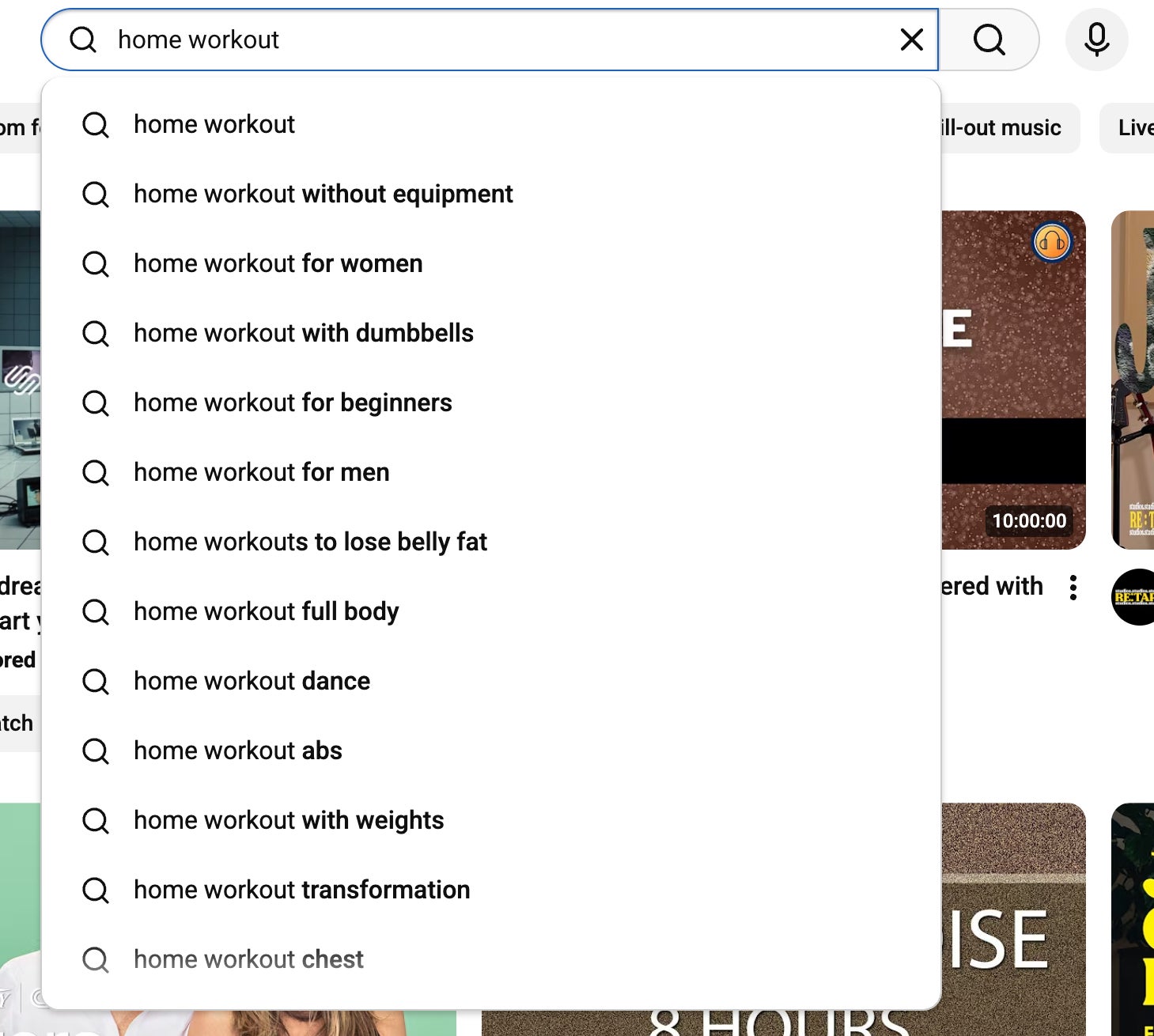
3. Add a letter after your keyword (e.g., “home workout a,” then “home workout b”) and so on through the alphabet.
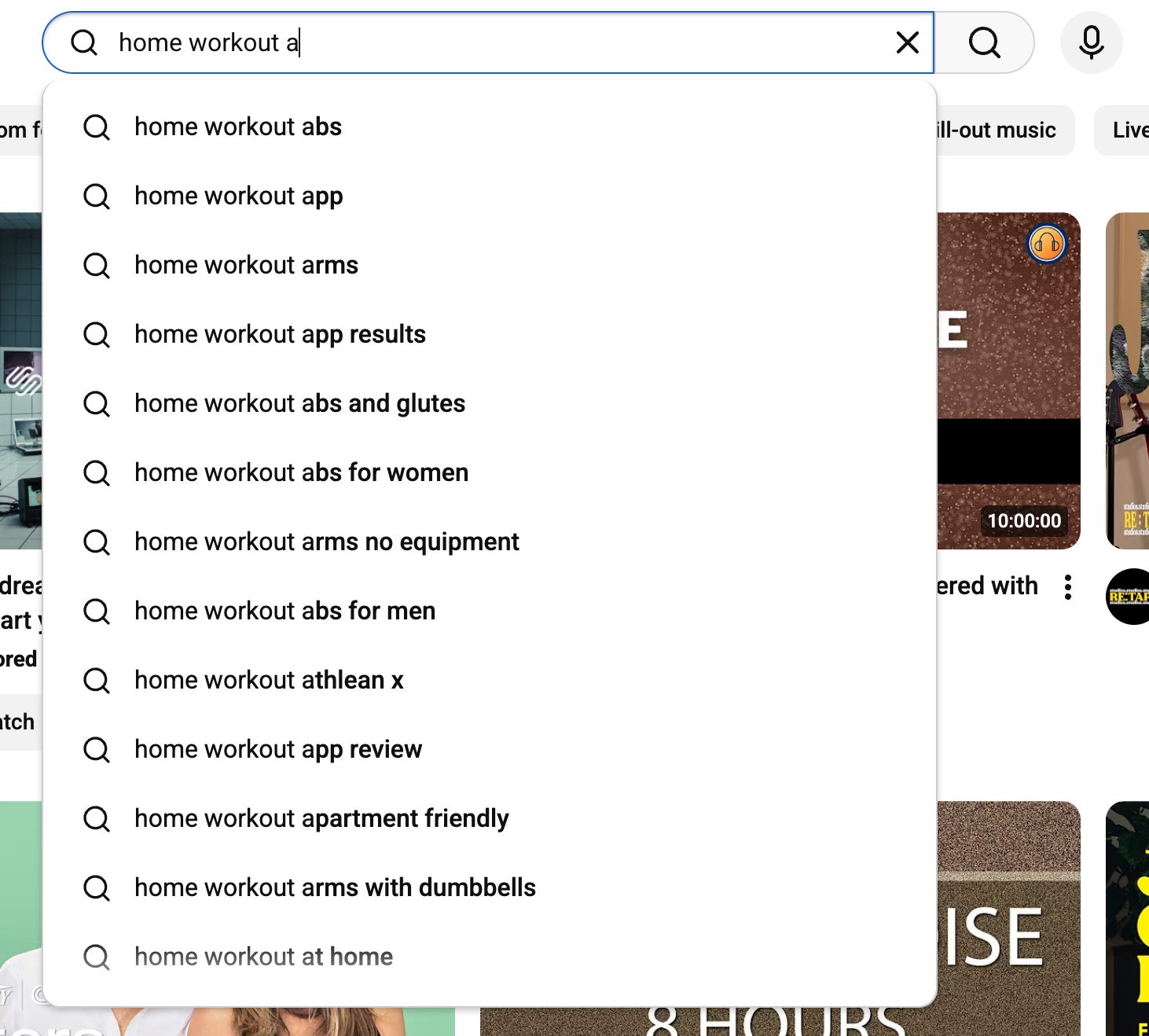
This surfaces long-tail keywords—specific, lower-competition phrases—that reveal exactly what your audience is searching for.
Capture cross-platform signals before they hit YouTube
Trends rarely originate first on YouTube.
Instead, they spark on high-velocity networks like TikTok and Instagram—where the 2026 Social Media Content Strategy Report shows brands are concentrating their heaviest resource investments. Many of these multi-platform movements are driven by the massive expansion of the creator economy and social commerce, which fundamentally alters how audiences discover new products and videos.
These hyper-saturated spaces serve as incubator labs where micro-narratives and cultural hooks bubble up weeks before expanding into full-length video concepts.
By the time a topic trends natively on YouTube, the window for compounding organic reach is already closing. Tracking cross-platform keywords turns reactive research into predictive social intelligence, giving you a definitive head start on search intent.
With Sprout’s Social Listening, your team bypasses manual dashboard triage to capture emerging conversations across the entire digital ecosystem—including Facebook, Instagram, TikTok, YouTube, LinkedIn, X, Bluesky, Reddit, Tumblr and the web.
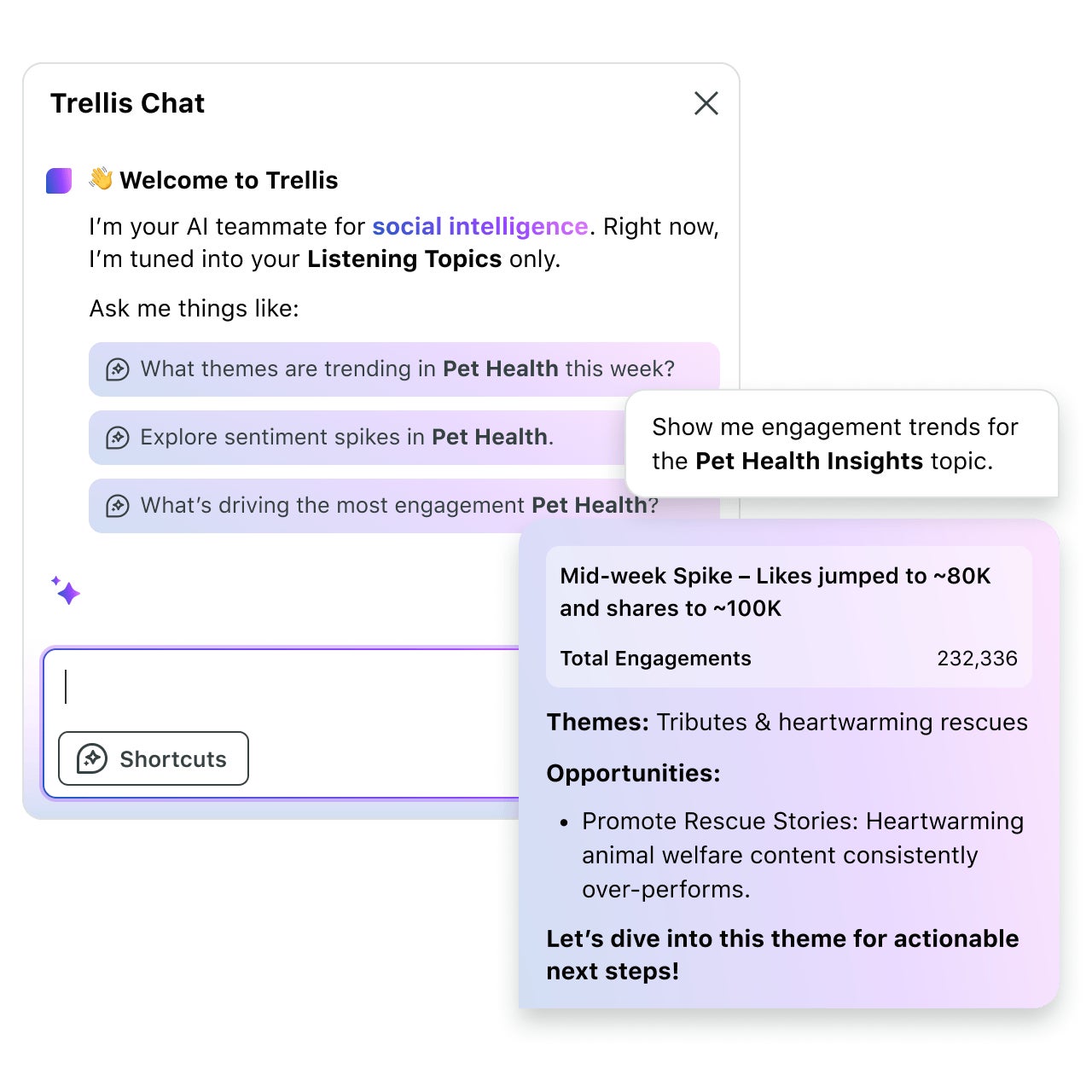
Powered by ultra-intuitive AI and Trellis, Sprout’s conversational AI Agent, Sprout handles the heavy lift of processing over 2 billion daily messages. This enables you to isolate high-intent keyword variants without Boolean complexity, surfacing critical audience insights while the narrative is still forming.
Turn predictive foresight into swift social action with NewsWhip
To scale your pipeline and protect your brand health at the speed of social, enterprise channels need to look beyond legacy platform metrics. NewsWhip by Sprout Social functions as your predictive media intelligence solution, using real-time predictive signals and agentic AI to detect unfolding stories across global news outlets, blogs and online communities before they become headlines.
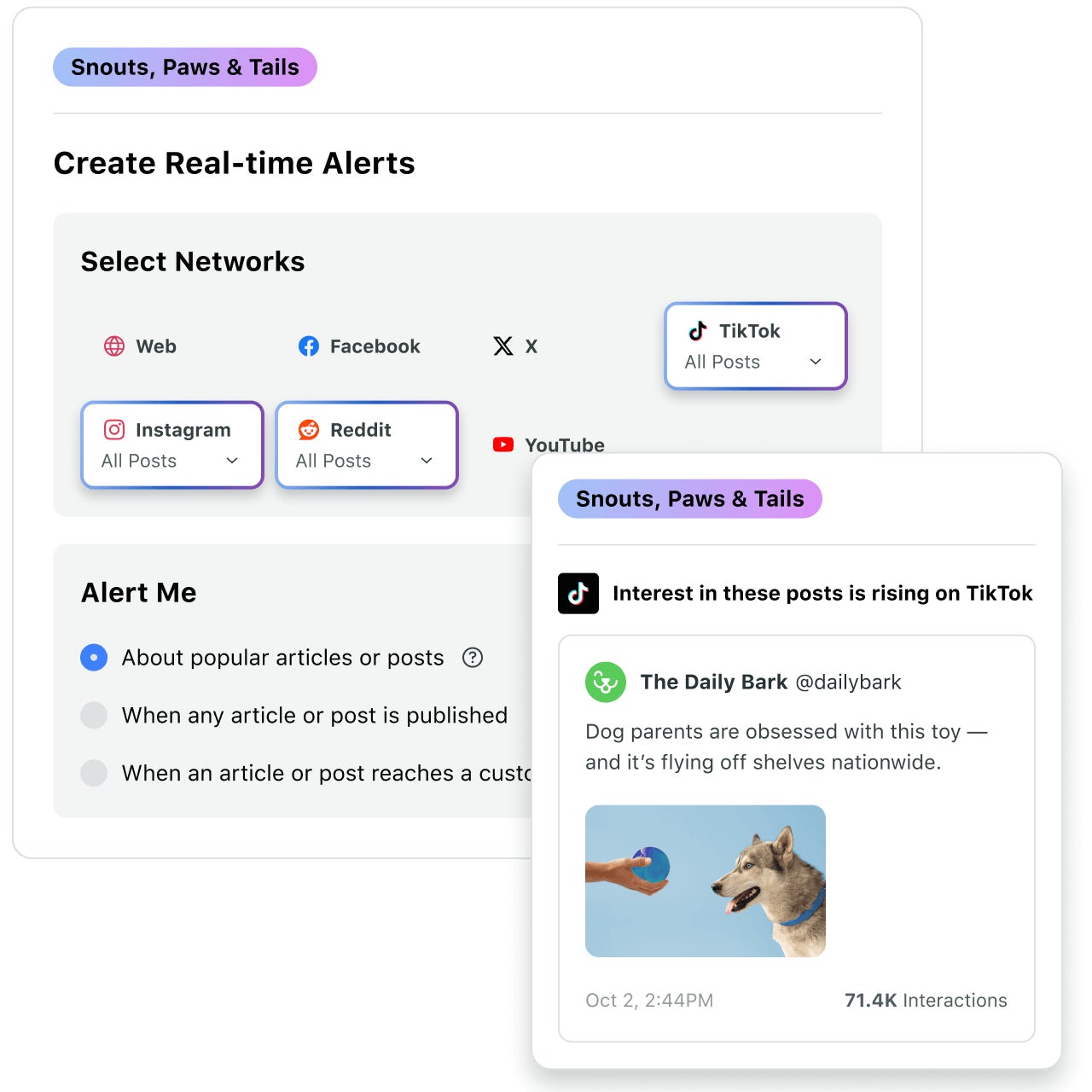
- Track live engagement signals: Instead of looking backward at historical data, NewsWhip tracks live engagement signals across the web to pinpoint exactly which topics are poised to go viral.
- Activate monitoring agents: NewsWhip’s real-time Monitoring Agents autonomously scan global discourse, investigate the catalyst behind a spike and deliver concise, contextual updates within minutes.
- Act on predictive intelligence: When a narrative triggers a velocity alert in NewsWhip, feed that term directly into Sprout’s Listening Query Builder to capture early search volume.
This integrated workflow transforms predictive media intelligence into immediate, impactful video strategy. By bridging foresight with Sprout’s central publishing calendar, engagement workflows and presentation-ready analytics, your social and PR teams can collaborate seamlessly to claim search market share and and clearly attribute the business impact of your video investments.
Ready to swap reactive research for a predictive content pipeline that wins the algorithm? Schedule a demo to see how Sprout Social can help you uncover actionable trends before your competitors.
Spotting 2026 YouTube Short trends
In 2026, vertical video is no longer just a secondary awareness tactic; it is the primary engine for audience discovery and subscriber acquisition. Navigating YouTube Short trends in 2026 requires an understanding of how the short-form algorithm has evolved toward contextual search and viewer habits.
Building an audience through YouTube Shorts demands agility, as these quick-hitting videos capture attention faster than traditional formats.
SEO-driven Shorts and indexing
The 2026 YouTube Shorts algorithm relies heavily on native search parameters. With dedicated search filtering options now built directly into the YouTube mobile interface, optimization matters just as much for a 60-second clip as it does for an hour-long documentary. The search engine indexes on-screen captions, descriptions and audio transcripts to categorize content.
Brainstorming engaging Youtube Shorts ideas that align with these indexable search parameters will help maximize your visibility in the Shorts feed.
Predictive audio hooks and cross-platform migration
As mentioned earlier, trends rarely start on YouTube; they typically cross-pollinate.
Micro-narratives and trending audio hooks bubble up within hyper-fast social environments like TikTok, Instagram and Reddit before migrating to YouTube. Capturing a trend means tracking these cross-platform signals and establishing immediate keyword authority on YouTube before the migration hits peak volume.
Mastering the viewed-vs-swiped-away Ratio
The primary metric governing Shorts distribution is the viewed-vs-swiped-away ratio. To win this metric, your structure must directly match user search intent within the first three frames:
- 0–3 Seconds: Present a visual or text-based hook that addresses the keyword query immediately.
- 3–30 Seconds: Deliver high-density, edited information without fluff or filler.
- 30–60 Seconds: Close with a clear, contextual call to action that encourages a channel click or comment interaction.
How to use YouTube trends to grow your channel
Finding a trend is the easy part. The harder question is whether you should act on it—and how fast.
Identify relevant trends
Not every trending topic on YouTube belongs in your content calendar. Trend relevance means the alignment between a popular topic and your brand’s voice, audience and resources. Chasing trends that don’t fit confuses your subscribers and dilutes your brand consistency.
Run every trend through this three-question filter before committing:
- Brand alignment: Does this topic fit your established voice and values?
- Audience interest: Will your current subscribers genuinely care about this?
- Resource availability: Do you have the time and equipment to execute quickly?
If the answer to all three is yes, move forward. If not, skip it and wait for the next one. Integrating these verified trends into a cohesive YouTube content strategy keeps your channel grounded in long-term business goals while remaining culturally reactive.
Evaluate trend fit and timing
For brand channels, leveraging topical trends is an excellent way to lean into contemporary brand storytelling, making your company appear more relatable and human.
Every trend follows a lifecycle: emerging, peak and declining. Knowing when to jump on YouTube trends determines whether your video earns views or gets buried.
The emerging stage—when search volume is growing but competition is still low—is your optimal entry point. Publishing at peak means competing against thousands of established videos. Publishing during decline means the audience has already moved on.
| Lifecycle Stage | Market Dynamics | Your Strategic Action |
|---|---|---|
| Emerging | High search volume growth, minimal video competition | Publish immediately to capture early search real estate. |
| Peak | Maximum saturation, heavy competition from legacy channels | Promote existing assets; pivot to long-tail variations. |
| Declining | Drop in search volume, audience fatigue | Abandon the topic and look for the next adjacent wave. |
Optimize YouTube SEO
YouTube SEO means optimizing your video’s metadata—title, description, tags and thumbnail—so the algorithm surfaces your content when people search for trending topics. Strong metadata is what connects your video to the right viewer at the right moment.
Follow these four steps to optimize YouTube videos for trending searches:
- Include your primary trend keyword in the first 60 characters of your title.
- Craft compelling YouTube descriptions that incorporate rich, long-tail search terms naturally.
- Add relevant tags and hashtags to give the algorithm additional context.
- Create a custom thumbnail that visually reflects the trending topic.
These YouTube SEO trends practices apply to every upload, but they’re especially critical when you’re competing for attention around a fast-moving topic.
YouTube trends to watch right now
The YouTube trends landscape in 2026 rewards creators who understand both format and audience behavior. These are the current YouTube trends defining the platform right now:
- YouTube Shorts momentum: Vertical video under 60 seconds continues to drive rapid subscriber growth and is the platform’s primary discovery engine for new audiences.
- Long-form podcasts: Conversational content over 30 minutes builds deep audience loyalty and generates the session duration the algorithm rewards.
- AI-generated content: Creators use AI tools to produce backgrounds, scripts and voiceovers—but transparency labels are now an audience expectation, not an option.
- Interactive features: Polls, premieres and community posts turn passive viewers into active participants, driving the engagement signals that matter most.
- Niche communities: Hyper-specific content categories attract smaller but highly loyal audiences with strong engagement rates and purchasing intent.
Short-form content drives discovery. Long-form content builds community. The strongest channels in 2026 use both.
YouTube algorithm signals for trending content
The YouTube algorithm doesn’t just measure views—it measures the quality of viewer behavior. These are the five signals it weighs most heavily:
- Velocity: The number of views your video earns in the first 24–48 hours after publishing.
- Engagement: The ratio of likes to dislikes, plus the volume of comments and shares.
- Session duration: How long a viewer stays on YouTube after watching your video.
- Click-through rate: The percentage of people who click your video after seeing the thumbnail and title.
- Audience retention: The percentage of your video that viewers watch through to completion.
Strong scores across all five tell the algorithm your content satisfies viewer intent—and it responds by pushing your video to more people. To scale this optimization process, leading digital teams utilize specialized YouTube marketing tools to automate search intent analysis and tracking.
Start leveraging YouTube trends with Sprout Social
Tracking YouTube trends manually across separate apps is inefficient and reactive. The fastest-growing brands treat discovery as a repeatable framework by combining keyword intelligence with cross-platform social listening.
When your search intent data, predictive intelligence and metadata design work together, viral growth stops being a lucky break and becomes an ongoing corporate asset.
Ready to transform your video intelligence workflow? Request a demo with Sprout Social to explore our Social Listening and predictive media intelligence capabilities.
YouTube trends frequently asked questions
Does Google Trends show YouTube-specific search data?
Yes. By using the search type dropdown menu within Google Trends, you can pivot from standard Web Search to YouTube Search. This isolates pure video search behavior, which frequently displays different velocity patterns than standard text searches.
What is the difference between a trending topic and a breakout topic?
A Google Trends trending topic exhibits a steady, predictable upward trajectory in search volume over time. A breakout topic indicates a sudden, extreme spike in interest where search volume has increased by more than 5,000%, indicating an urgent opportunity for immediate content creation.
How do you track a declining YouTube trend?
A declining trend presents a steady downward curve in daily search volume inside Google Trends, paired with a noticeable drop-off in view-to-comment engagement ratios on newly published videos within that keyword category.
To avoid wasting resources on a fading movement, brands use tools like Sprout Social to monitor cross-platform conversation volumes, ensuring they spot the exact moment audience interest begins to cool off.


Share